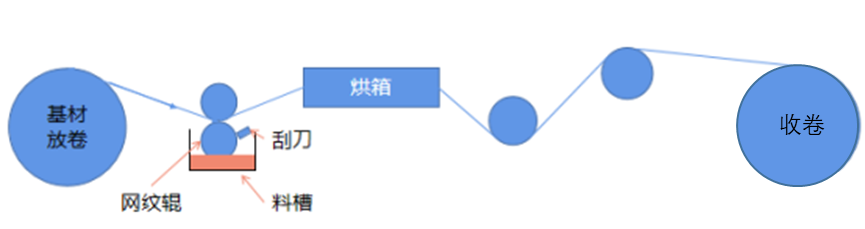
PET film is often used in the coating process according to different applications, which is a technology that coats a layer of material with a specific function (release agent, acrylate, polyurethane coating, etc.) on a roll of material (such as PET base film), and then winds it after drying in an oven (the schematic diagram of the principle is shown in Figure 1). If the anilox roller rotates in the trough, it will produce bubbles, and if the bubbles are coated on the substrate, it will produce uneven coating, and even many dense bubble spots, which will have a great impact on the appearance of the product.
1. The cause of bubbles
- The filler in the paint has a large specific surface area, and during the preparation of the coating, the air will produce bubbles after the filler enters the paint
- Emulsifiers, wetting agents, etc. are added to the coating in the production process, resulting in bubbles in the production process
- When the machine stirs and mixes, air enters to form bubbles
- The solvents used in coatings have low boiling points and are prone to bubbles when heated
- When the paint is pumped into the trough using a diaphragm pump, the liquid bubbles under the impact of the blow
2. How to solve bubbles
- Add defoamer
The HLB value of the defoamer is small, and it has a surface tension that is smaller than that of the bubble, which can spread on the surface of the bubble and destroy the surface viscosity and elasticity of the foam system. At the same time, it can destroy the foaming agent, reduce the surface tension, and form an inelastic foam, which is easy to destroy under gas pressure, resulting in the bursting of bubbles.
Let stand to defoam
Mechanical defoaming device
In the actual coating production process, there are many devices for defoaming using this method, and the commonly used devices of coating equipment at this stage include defoaming rod (bubble bag), threaded rod defoaming device and the like.