
【Application of light-curing technology in different fields】
Due to the advantages of fast curing, energy saving and environmental protection, light-curing products are widely used, and are mainly used in the field of wood coating at the earliest. In recent years, with the development of new initiators, reactive diluents and photosensitive oligomers, the application of light-curing coatings has gradually expanded to the fields of paper, plastics, metals, fabrics, and auto parts. The following will briefly introduce the application of several light-curing technologies in different fields.
- Light-curing 3D printing
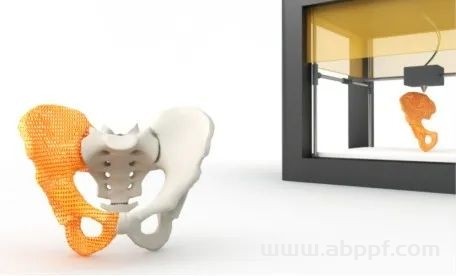
Light-curing 3D printing is one of the most accurate and commercialized rapid prototyping technologies at present. It has many advantages, such as low energy consumption, low cost, high precision, smooth surface and good repeatability, and has begun to be widely used in aerospace, automotive, mold making, jewelry design and medical fields.
For example, by printing a prototype rocket engine with a complex structure and analyzing the flow mode of gas, it is helpful to design a rocket engine with a more compact structure and higher combustion efficiency, which can effectively improve the R&D efficiency of complex parts and shorten the R&D cycle of automobiles. It is also possible to print out the mold or pour the mold directly, so as to quickly make the mold and so on.
Light-curing 3D printing technology has developed stereolithography (SLA), digital projection (DLP), three-dimensional inkjet molding (3DP), continuous liquid surface growth (CLIP) and other technologies [3]. As its printing material, photosensitive resin for light-curing 3D printing has also made great progress, and is developing in the direction of functionalization according to the needs of the application.
- UV light-curing products for electronic packaging
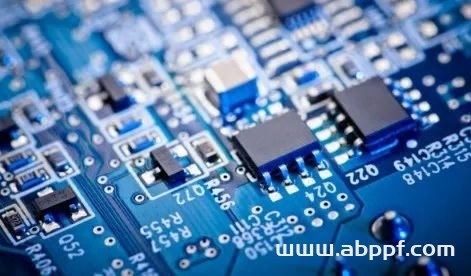
The innovation of packaging technology has promoted the transition of packaging materials from metal and ceramic packaging to plastic packaging. Epoxy resin is the most widely used in plastic packaging, excellent mechanical and mechanical properties, heat and humidity resistance are the prerequisites of high-quality packaging, and the fundamental problem that determines the performance of epoxy resin is not only the structure of the epoxy resin body, but also the influence of curing agent is also a very important factor.
Compared with the thermal curing method used in conventional epoxy resin, cationic UV curing not only has better chemical stability of photoinitiators, but also has a faster curing speed of the system, which can be completed within tens of seconds, with extremely high efficiency, no oxygen resistance to polymerization, and deep curing, which increasingly highlights the importance of cationic UV curing technology in the field of electronic packaging.
With the rapid development of semiconductor technology, electronic components are becoming more and more highly integrated and miniaturized, and light weight, high strength, good heat resistance, and excellent dielectric properties will be the development trend of new high-performance epoxy packaging materials, and light curing technology will play a more important role in the development of electronic packaging industry.
- Printing inks
In the field of packaging and printing, the use of flexographic printing technology accounts for more and more proportions, it has become the mainstream technology of printing and packaging, and is the inevitable trend of future development.
There are many types of flexo inks, including the following: water-based inks, solvent-based inks, and ultraviolet curable (UV) inks. The main use of solvent-based ink is non-absorbent plastic film printing; Water-based inks are mainly used in printing materials such as newspapers, corrugated cardboard and cardboard; UV inks are widely used, and they are used to print well on plastic films, papers, metal foils, and other materials [4].
UV ink has the characteristics of environmental friendliness, high efficiency, good printing quality and strong adaptability, and is a new type of environmentally friendly ink that is very popular and has a high degree of attention, and its development prospects are very good.
Flexo UV inks have a wide range of applications in packaging printing. Flexo UV inks have several advantages [5]:
(1) Flexo UV ink has no solvent emission, safe and reliable use, high melting point and no pollution, so it is suitable for making safe and non-toxic packaging for food, medicine, beverages and other packaging with high requirements for packaging materials.
(2) When printing, the physical properties of the ink remain unchanged, and there is no volatile solvent, the viscosity remains unchanged, and it will not cause damage to the printing plate to cause paste, stacking and other phenomena, and the printing effect is still good when printing with higher viscosity ink.
(3) The ink drying speed is fast, the product printing efficiency is high, and it can be widely used in various printing methods, on plastics, paper, films and other substrates.

With the development of new oligomer structures, reactive diluents and initiators, the future application range of light-curing products is immeasurable, and the market development space is unlimited.


