
Jafon:
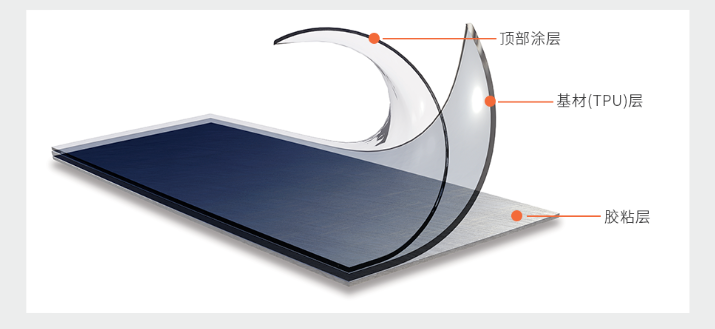
No! Although the product design may be different for different brands, generally speaking, the structure of PPF consists of four layers:
1) The surface of PPF is generally a thin layer of coating, usually using acrylic or polyurethane, which is designed to provide properties such as anti-fouling.
2) Underneath the surface is the core substrate layer, which is typically made of thermoplastic polyurethane (TPU). TPU material has excellent tensile properties and durability, and can prevent scratches and chips on the paint surface by absorbing the impact of stones.
3) Under the TPU substrate is an adhesive layer, most commonly used acrylic pressure-sensitive adhesive. The adhesive layer needs to position the TPU substrate on the body of the vehicle and adhere it firmly to the surface of the vehicle, while at the same time being easily peeled off without causing damage to the paintwork.
4) A liner film is underneath the adhesive layer, made of polyester, which can be removed before installation.
These four layers of structure are combined to form a PPF protective film, and the thickness is generally about 6.5~10mil thick.
2. Is the PPF effect of different materials and formulations the same?
Fafon:
It's different! PPF products vary greatly depending on the material chosen and the formulation of the surface coating and TPU substrate.
Typically, the formulation of the surface coating needs to be able to achieve good self-healing properties, as well as anti-fouling properties.
As the most critical substrate layer in the PPF structure, TPU can be formulated to meet specific market and customer needs. For example, TPU with excellent tensile properties helps to ensure high efficiency and quality of PPF installations.
By optimizing the TPU formulation, the final PPF remains non-yellowing and consistently high quality even after long-term exposure to intense UV radiation.
In summary, the TPU material used in a high-quality PPF should have excellent durability and optical clarity, so as to bring a consistent look and long-term protection to the car.
In addition, the ideal adhesive layer allows the protective film to maintain optimal initial adhesion during installation when it needs to be re-attached. At the same time, the edges do not warp during long-term lamination, and when necessary to be removed, no residue is ensured that the surface paint will not stick to the surface.
For finished paint protection films, PPF made from carefully selected materials can provide protection for the surface of the vehicle for more than ten years.
Fafon:
As mentioned in the previous question, the choice of chemical composition for each layer of PPF is critical to the quality of the final product. Good PPF starts with good raw materials, and any layer of material imperfections will result in a discount in the performance of the final product, which will manifest itself through stains, scratches, yellowing, peeling and hydrolysis.
In order to predict and quantify the impact on PPF over actual exposure time, accelerated weathering testing is particularly important in the development of PPF products. Suppliers with knowledge of materials science and testing experience can improve the accuracy of such predictive testing by designing test methods and compressing testing time from months or even years to days, saving vehicle owners and installers significant time and money.


