Ever since I started learning about car wraps more than 20 years ago, people have often told me how important post-heating treatment is. I've heard different explanations, the two most common being "breaking the membrane memory" or "reshaping the membrane memory", which are basically correct.
Simple post-heating treatment can prevent the film from warping and falling off after application. At the same time, post-heating treatment can also be used to carefully check the film quality. When checking the areas that require post-heating treatment, you can pay attention to which areas are missing or which areas have air and form bubbles.
Which areas require subsequent heat treatment?
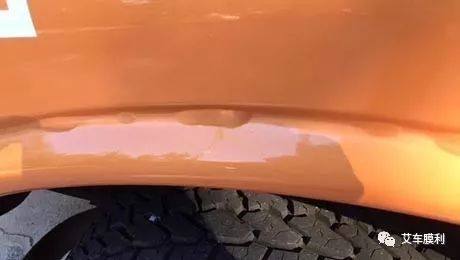
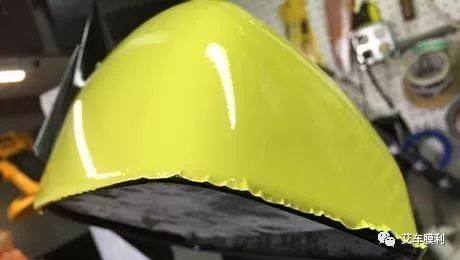
It is a golden rule to heat-treat areas of the film that stretch more than 10%. It is particularly important to perform post-heating treatment in the recessed areas where the film is prone to warping.
These areas include, but are not limited to: door handles, window channels on vans, grooves around wheel hubs (such as those on Chevy vans), bumpers, and film-stretched panel edges (such as reflectors) .
What is the subsequent heat treatment temperature?
It is recommended that the post-heating temperature of Avery Dennison film is 175℉-195℉, and it is important to use an infrared thermometer to verify the post-heating temperature.
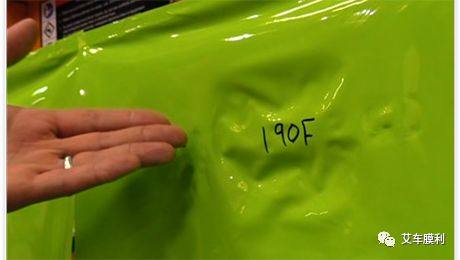
175℉-195℉ may be a lot higher than you think, use an infrared thermometer to ensure the correct temperature is reached. Infrared thermometers don't need to be expensive, the one I use regularly is purchased at Harbor Freight for $20. In addition to being cheap, it's relatively small and easy to hang on my tool belt and have on hand.
Hot air gun vs. welding gun for car wrapping
In my experience, welding guns don't do post-heating very well. The welding gun will generate very strong concentrated heat, which will burn the film before reaching the subsequent heat treatment temperature. The heat generated by the hot air gun will form a wider thermal cone, which can heat a larger area.
Post-heating process
If you watch Justin Pate's post-heating video on the Avery Dennison YouTube page, you can see a number of different post-heating methods.
Note that all of the methods shown use an infrared thermometer, but there are higher-end heat guns that have an infrared thermometer built into them, eliminating the need to purchase them separately. As Justin demonstrated in the video, you only need to aim the infrared light at the area to be heated and move the heat gun slowly to avoid burning the film. After reaching the minimum temperature of 175℉, move the heat gun along the contours of the car.
This process actually does not significantly increase the wrapping time and helps ensure that the car does not need to be re-processed due to warping of the vinyl wrap.
If the minimum temperature is not reached, subsequent heat treatment is performed.
If you choose not to perform post-heat treatment, or do not verify the temperature to ensure that the minimum post-heat treatment temperature is reached, the film is likely to warp. This is especially true in areas where the film tension is high.
In Justin Pate's video, he gave a good example. At about the 1-minute mark, he demonstrated the correct and incorrect door handle film operations for post-heat treatment. When he removed the wrap from the car and heated it, the improperly reheated wrap shrank back to its original shape, while the properly reheated wrap retained its shape.
I usually recommend applying the film to the entire side of the car or at least to a few panels, and then doing a post-heat treatment. This allows the adhesive to bond the panels well. If any air collects under the panel, it can be squeezed out later.
Also, I recommend doing a final inspection after the film is applied before handing the car over to the customer.