1. Overview of window film
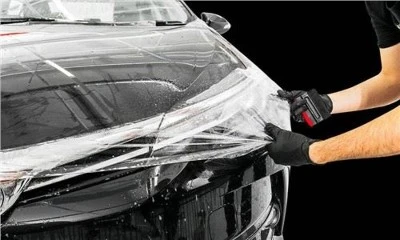
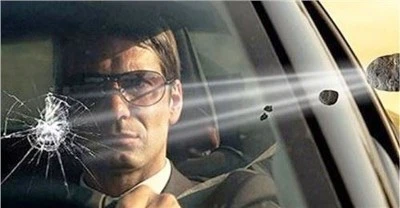
It is mainly used for automobile glass, building door and window glass, partition glass, ceiling glass, etc. It is attached to the glass surface to improve the performance and strength of the glass, and to make it thermal insulation, heat insulation, energy saving, explosion-proof, beautify the appearance, Cover privacy and security protection functions.
2. Window film classification
According to different application fields, window films are currently mainly divided into two categories: architectural glass window film and automotive glass window film.
According to the different materials plated , it can be divided into metal film and ceramic film .
In terms of production technology , it can be divided into three categories: dyed film, primary color film, and vacuum coating . Among them, vacuum coating can be divided into vacuum evaporation coating and magnetron sputtering coating.
3. Window film manufacturing process
There are four common window film manufacturing processes: dyeing process, vacuum spraying technology, magnetron sputtering technology, and lamination composite process.
1. Dyeing process: The glue mixed with dye is coated on PET or between two layers of PET films through a coating compounding process to color the PET substrate and make it show different colors as needed. The advantages are various colors, simple process, and low cost; the disadvantages are that it is not resistant to ultraviolet radiation, is easy to fade, and has a short shelf life.
2. Vacuum spray coating technology: Vacuum evaporation coatings can be coated with various metals, alloys or oxide coatings by applying a thermal evaporation (for pure metals with low melting temperature) process. The vacuum spraying process usually uses pure aluminum coating, and can be made into films with different visible light transmittance and reflectivity, so that the film has the best sunlight control performance.
3. Magnetron sputtering technology Magnetron sputtering coating method is an advanced process developed in the late 1970s. It uses special vacuum equipment to combine various metals or metals under the action of electric energy. The synthetic target is struck by charged ions to form multiple layers of dense, low-reflective and highly insulating metal film layers, which are coated on the surface of the substrate in an orderly and even manner, and are compounded to produce a variety of unique, stable colors. High-level transmittance selectivity ensures that the product has sufficient toughness, explosion-proof, heat insulation, UV resistance of 99%, and long shelf life.
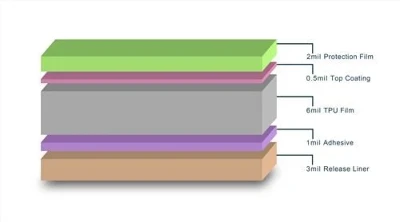
4. Laminated composite process glass window film is a multi-layered functional polyester composite film material. Thin layers with different functions are composited together through adhesive, so that it has the functions of explosion-proof, heat insulation and safety. Only a high-precision coating system can ensure that various process parameters are effectively controlled during the manufacturing process of glass window film.
Among the dazzling array of products, demonstrations and introductions, many brand products will emphasize that their products are magnetron sputtered metal films, which are high-end films and are different from vacuum evaporated films.
So what is a vacuum evaporated film and what is a magnetron sputtering film? What do they have in common and what are their advantages and disadvantages? Briefly introduce the difference between the two processes.
Vacuum evaporation process
The vacuum evaporation process refers to a process that uses a certain heating evaporation method to evaporate and vaporize coating materials (or film materials) under vacuum conditions, and the particles fly to the surface of the substrate and condense to form a film.
Evaporation is an earlier and more widely used vapor deposition technology. It has the advantages of simple film formation method, high film purity and density, and unique film structure and performance.
Principle: Put the substrate into the vacuum chamber, heat the film material with resistance, electron beam, laser and other methods to evaporate or sublimate the film material and vaporize it into particles (atoms, molecules or atomic groups) with a certain energy (0.1~0.3eV) ). The gaseous particles are rapidly transported to the substrate in a linear motion with basically no collision. Part of the particles reaching the surface of the substrate are reflected, and the other part is adsorbed on the substrate and undergoes surface diffusion. Two-dimensional collisions occur between the deposited atoms, forming clusters. may remain on the surface for a short time and then evaporate. Particle clusters constantly collide with diffusing particles, or adsorb single particles, or release single particles. This process is repeated. When the number of aggregated particles exceeds a certain critical value, they become stable nuclei, and then continue to adsorb and diffuse particles and gradually grow up. Finally, through the contact and merger of adjacent stable nuclei, a continuous film is formed.
This process is carried out in a vacuum, and the metal vapor will not oxidize when it reaches the surface of the substrate. Generally, vacuum evaporation can only choose metals with lower melting points, such as aluminum, nickel, chromium, etc.
Magnetron sputtering process
Magnetron sputtering is a collision process between incident particles and target.
Principle: The substrate is sent into a vacuum chamber equipped with a magnetron cathode and sputtering gas (argon). A negative voltage is applied to the cathode, and a glow discharge occurs in the vacuum chamber to generate plasma. Since the metal target is negatively charged, the plasma is The positively charged gas ions are accelerated and hit the target surface with an energy equivalent to the target pole position drop U, blasting out the atoms of the metal target and causing them to precipitate on the surface of the substrate to form a metal film.
Compared with the traditional vacuum spraying process, the magnetron sputtering process has many advantages, such as stronger adhesion between the coating and the substrate; it can easily produce thin films of high melting point substances; it can be produced on large-area continuous substrates. Obtain a more uniform film; it is easy to control the composition of the coating, and various alloy coatings with different compositions and ratios can be produced.
Compared with the two processes, magnetron sputtering has a wider range of metals to choose from, a wider process range, and wider applications, but the corresponding production cost is higher.
How to choose between two processes
For automobile window film products, whether magnetron sputtering film or vacuum evaporation film is better has its own unique evaluation criteria. Generally speaking, a simple comparison can be made through the two items of thermal insulation ability and mounting ability.
1.Thermal insulation ability
The magnetron sputtered metal film can reflect higher near-infrared rays, while having higher visible light transmittance and lower visible light reflectivity;
Vacuum evaporated metal films can also reflect near-infrared rays. If higher infrared rays are to be reflected, this can only be achieved by increasing the thickness of the metal layer, but at the same time it will reduce the visible light transmittance and increase the visible light reflectivity, which will cause a certain amount of light pollution.
Magnetron sputtering film has a wider range of metal selection, especially the metal layer can be superimposed on the metal oxide layer, which can ensure high infrared blocking ability, while ensuring low visible light reflection and high visible light transmission. This product is also one of the most high-end product categories in the automotive window film market.
2. Mounting ability
Magnetron sputtering metal films are generally a superposition of multiple metals, often containing multiple layers of metals or metal compounds. Because metal reflects heat, it will also reduce the shrinkage ability of the polyester film itself, and the shrinkage ability is moderate.
Due to the low metal content of vacuum evaporated metal films, the metal will basically not affect the shrinkage of the polyester film, so it has the best shrinkage ability.
From the above analysis of heat insulation and mounting capabilities, it can be seen that the magnetron sputtering process can produce very high-performance automotive window film products, but at the same time the cost is very high and the mounting requirements are also very high. The vacuum evaporation process can only produce relatively low-end products, but the cost is lower, it is easier to mount, and the final appearance quality is more guaranteed.