About color change TPU
Color change TPU, as the name suggests, is to make TPU into a variety of colors and textures, so that its appearance can be as complex and diverse as the color change film, and the function can play the same role as the car coat to protect the car paint from scratching.
In the past, PVC color change film and TPU car clothing were actually two products with distinct attributes, the former focused on changing the color of the vehicle to achieve the effect of beautification and renovation; The latter focuses on protecting the original paint from scratching and maintaining the value of the paint. Therefore, the production substrates, equipment, and processes of these two are not the same, and few factories can produce these two products at the same time.
|
|
|
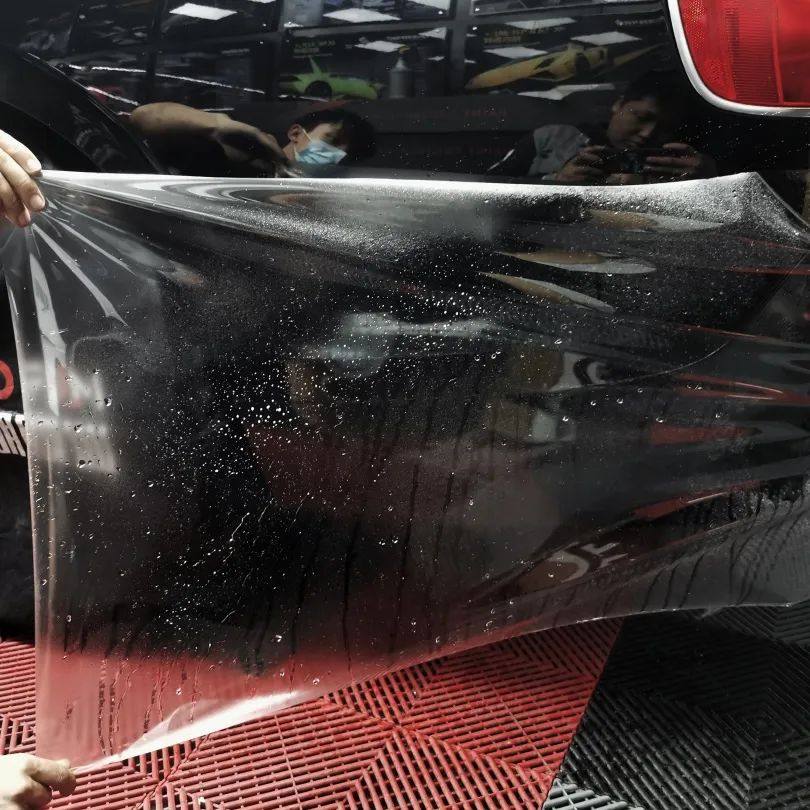
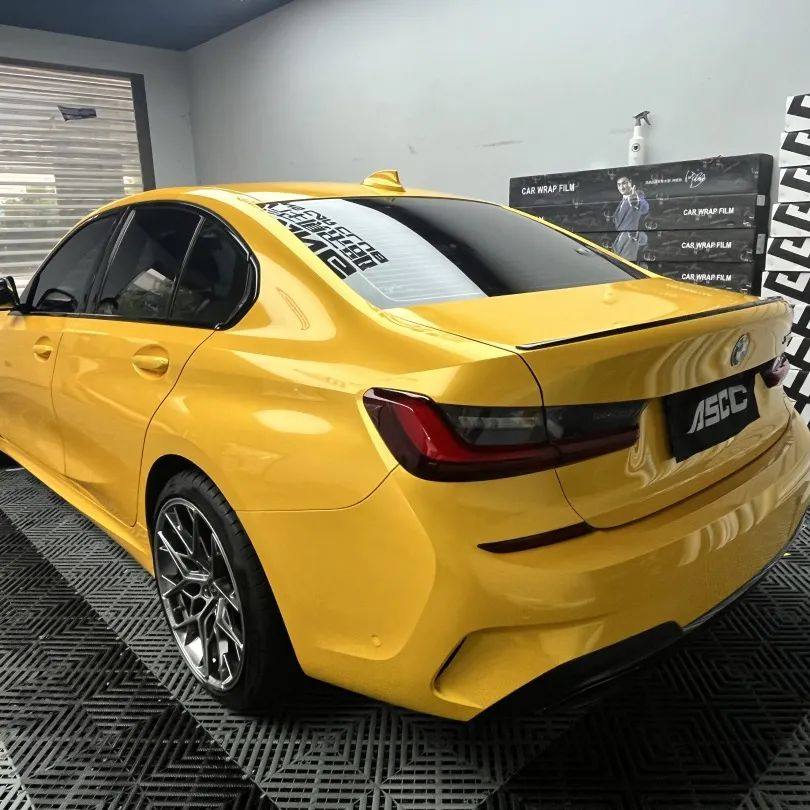
(Transparent TPU Clothing VS PVC Color Changing Film)
So, how is the color change TPU that integrates the two functions of PVC color change film and TPU car clothing produced? Can color change TPU really meet the diverse needs of end car owners? Why are most of the color change TPU manufacturers producing color change film factories, not car clothing factories? In today's article, the editor will take you to learn more about the story behind the color change TPU.
Introduction to the production process of color change TPU
- Pure TPU substrate manufacturing process
At present, there are two main processes for the production of color-modified TPU, the first process is to coat the back of the transparent TPU substrate with a liquid TPU with color.

This manufacturing process is used by the car clothing factory, because the substrate layer is still a pure TPU material, and the manufacturer is also produced in accordance with the functions and standards of the car clothing, so the color change TPU manufactured by this process is essentially an invisible car clothing. Except for the color and transparent clothing, the performance and service life of the product are the same.
The disadvantages of this process are also obvious, mainly reflected in two points:
1. TPU liquid tinting is relatively complex, and the yield is low, so the production cost is relatively high.
2. The color is limited, limited to some conventional monochrome crystal systems, such as black, red, yellow, blue, green, gray, etc., it is difficult to modulate various complex color systems as you like.
- TPU+PVC composite process
The second process is to laminate a thin PVC color change film on the basis of thin transparent TPU, and finally composite the whole to change the color of TPU. (Note: To change the color of TPU, you need to use a polymer PVC color modification film substrate with higher flatness, toughness and stability)

The color modification TPU manufactured by the composite process has two significant advantages: 1. The cost of thin TPU and thin color modification film used in the substrate is significantly reduced compared with pure TPU. 2. In principle, all color modification films can be produced with color modification TPU, which is not limited by the color mixing of pure TPU substrate.
At the same time, the defects of the color-changing TPU manufactured by this process are also obvious:
1. In order to make the product fit tightly and smoothly loaded, the thickness of the two main substrates of the product has been weakened. For TPU materials, for every 1 mil decrease in thickness, the protective performance is weaker by one level, so the scratch resistance of TPU is weaker.
2. The ductility of TPU and PVC is different, and forced composite is easy to cause construction accidents.